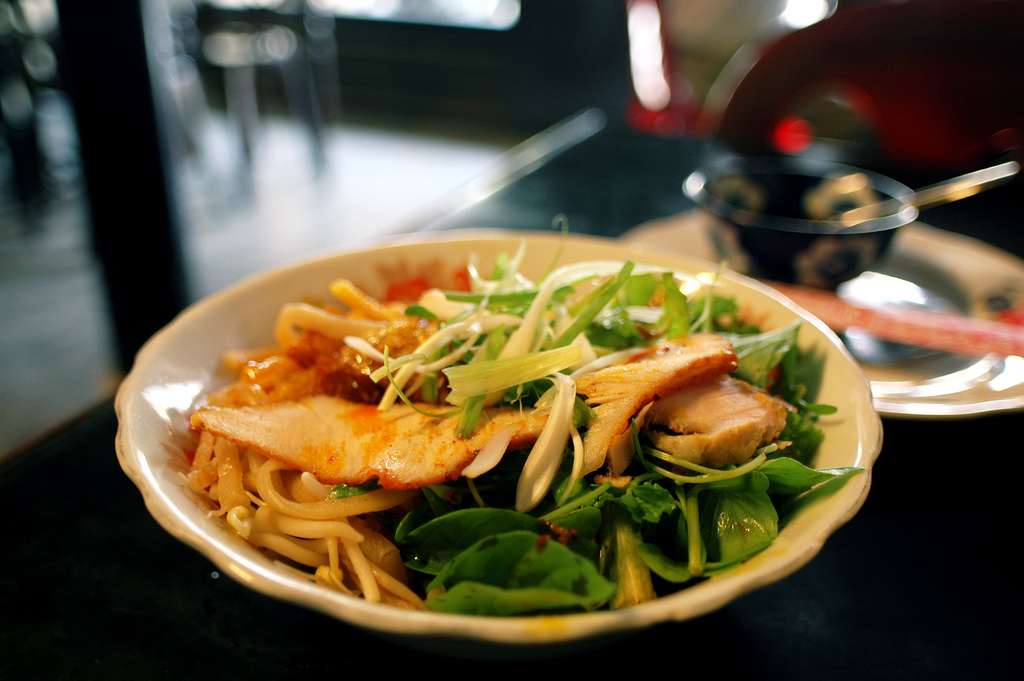
Cao Lau Hoi An is an iconic dish of the ancient town, embodying the culinary fusion of Vietnamese, Japanese, and Chinese influences. With its distinctive chewy noodles, flavorful char siu pork, and fresh local herbs, each bowl of Cao Lau offers a deep cultural experience telling the story of a once-bustling trading port and the enduring love for food of Hoi An’s people.
Hoi An, an ancient town nestled along the Hoai River, is famous not only for its glowing lantern-lit streets and unique architectural blend but also as a true culinary paradise. Among countless local delicacies, Cao Lau holds a special place, standing as an indispensable symbol of Hoi An’s culinary culture. More than just a dish, Cao Lau is a story of history, cultural exchange, and the passion for food passed down through generations.
1. The Origin and Journey of Cao Lau
Cao Lau appeared in Hoi An hundreds of years ago, during the period when the town was a prosperous trading port with lively exchanges between Vietnam, Japan, China, and Western countries. This dish is a vivid testament to cultural interaction bearing similarities to Chinese cuisine and Japanese noodle-making techniques, yet preserving a unique Vietnamese identity.
The name “Cao Lau” itself sounds elegant and traditional. It is believed to originate from the old term referring to the “upper floors” of ancient eateries, where merchants once sat to enjoy their meals, discuss business, and overlook the bustling streets below.
Thanks to its strategic location on the Maritime Silk Road during the 17th–18th centuries, Hoi An became a cultural crossroads. This convergence gave rise to a diverse culinary heritage, with Cao Lau as one of its finest representatives. While its noodles may resemble Japanese udon or Chinese noodles, the preparation and flavor are entirely distinctive showcasing the creativity and refinement of local people.
Cao Lau is not a coincidence but the result of thoughtful adaptation to local tastes and ingredients. It is not merely food, but a living part of Hoi An’s history, carrying centuries of prosperity and cultural exchange.
2. The Unique and Elaborate Preparation of Cao Lau
What makes Cao Lau truly special lies in its meticulous and elaborate preparation, from ingredient selection to execution skills passed down through generations. Each step is an art form in itself.
Cao Lau Noodles – The Soul of the Dish
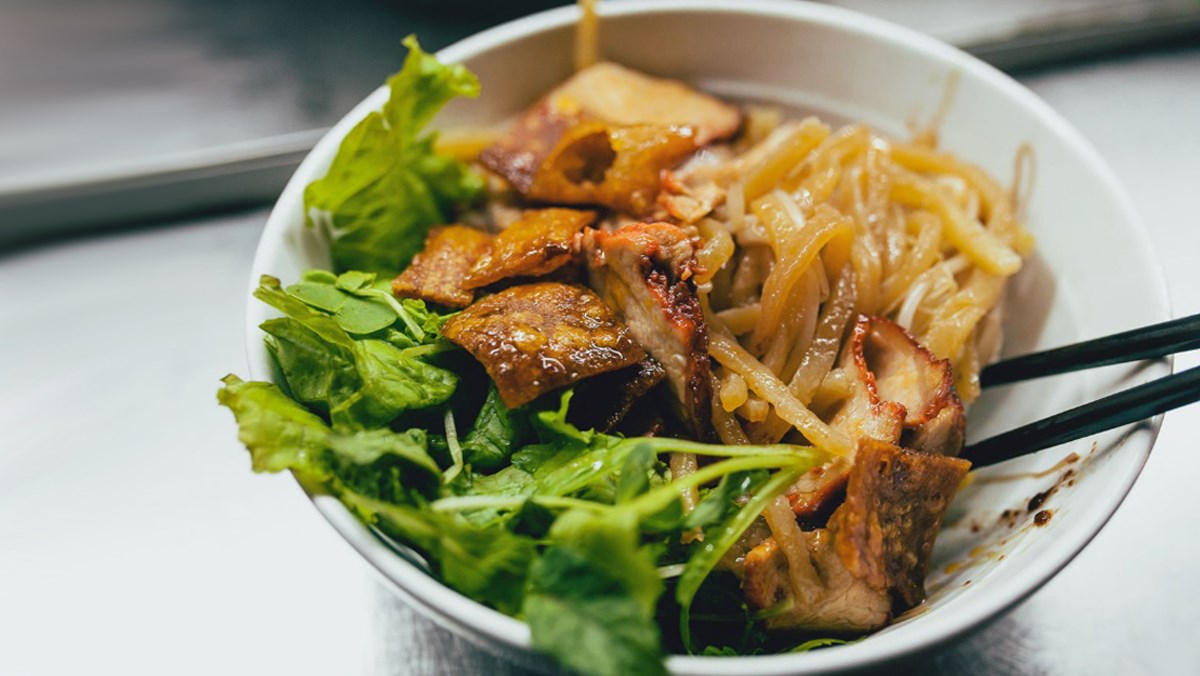
The noodles are the most important element, defining the identity of Cao Lau. Unlike pho or vermicelli, Cao Lau noodles are made from local rice soaked in ash water derived from trees on Cham Island. This ash water gives the noodles their light yellow hue and signature chewy, crispy texture.
Even more uniquely, the dough must be kneaded using water from Ba Le Well, an ancient well in Hoi An believed to contain ideal minerals that give the noodles their perfect elasticity and purity of flavor. The dough is then rested, rolled, hand-cut, steamed, and sun-dried to achieve the ideal firmness and sheen.
The “Sacred” Broth
Unlike noodle soups, Cao Lau uses very little broth just enough to coat the noodles. The sauce is simmered from pork bones and char siu drippings, resulting in a thick, amber-colored sauce with a rich yet balanced sweetness. Long simmering and careful seasoning create a glossy, aromatic base that ties all ingredients together.
Char Siu Pork – A Chinese Touch
Pork belly is marinated with five-spice powder, garlic, fish sauce, sugar, and a touch of honey, then slowly braised or grilled until tender inside with a caramelized exterior. Thinly sliced, the pork adds depth, sweetness, and aroma to the dish.
Fresh Herbs – A Taste of the Countryside
Cao Lau is served with a variety of fresh herbs such as mustard greens, basil, fish mint, and bean sprouts. Most notably, these herbs come from Tra Que Vegetable Village, known for organic farming and distinctive flavors. The freshness of the herbs balances the richness of the noodles and pork.
Crispy Noodles and Fried Pork Rind
Crispy fried noodle bits and crunchy pork rind are added for texture and richness. These elements enhance both flavor and mouthfeel, making each bite more exciting.
3. Enjoying Cao Lau – A Cultural Experience
Eating Cao Lau in Hoi An is more than a meal it is a cultural journey. Locals often say Cao Lau is the soul of Hoi An, a flavor of memory that lingers long after leaving.
The dish is commonly served in small street-side eateries or traditional restaurants. Sitting on rustic wooden stools, watching life pass by in the ancient town, savoring each chewy noodle and fragrant slice of pork, diners feel transported back to Hoi An’s golden trading days.
The best time to enjoy Cao Lau is early morning, when the town is quiet, or at dusk, when lanterns begin to glow. Famous spots include Ba Thanh (Tran Cao Van Street), Lien Restaurant (Thai Phien Street), and Trung Bac (Tran Phu Street). Prices range from 30,000–50,000 VND per bowl remarkably affordable for such a unique culinary experience. Pair it with a glass of Mot herbal drink or traditional tea for a complete meal.
4. The Harmony of Ingredients
Every component of Cao Lau plays a vital role none can be omitted. The chewy noodles, savory pork, concentrated sauce, and fresh herbs create a perfectly balanced dish that has become a must-try for visitors to Hoi An.
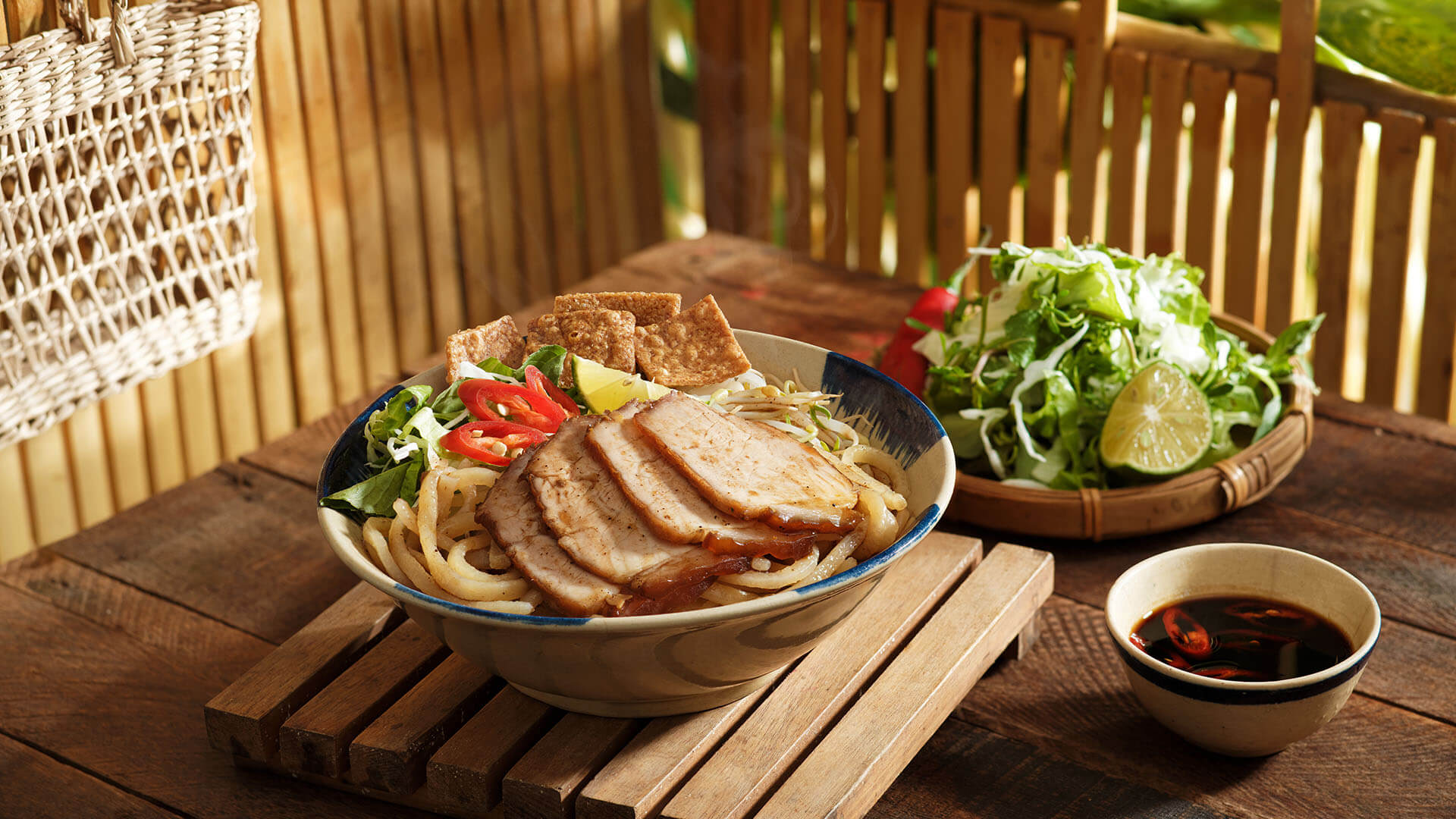
From the uniquely prepared noodles to the carefully marinated pork, from the lightly coated sauce to the crisp rice crackers and fried noodles, Cao Lau offers layers of texture and flavor that are both refined and comforting.
5. The Flavor Profile – Subtle and Complex
A single bite of Cao Lau reveals a symphony of flavors: chewy noodles, rich pork, fresh herbs, gentle sweetness, and subtle richness. The dish is savory yet light, flavorful without being heavy.
Its presentation is simple yet elegant golden noodles at the base, thin slices of pork on top, vibrant greens, crispy rice crackers, and a drizzle of thick sauce. Diners mix everything together to fully experience the harmony. A bit of Hoi An chili sauce or lime juice can be added to taste.
Cao Lau is not just food it is a multi-sensory experience that reflects the care, craftsmanship, and cultural pride of Hoi An’s people.
6. Cao Lau in the Lives of Locals and Visitors
For locals, Cao Lau is a daily staple and a source of pride. Many families preserve their own secret recipes, passing them down through generations. Long-standing eateries have become gathering places for both locals and travelers, offering warmth and authenticity.
Cao Lau is typically enjoyed for breakfast or lunch, but also as an afternoon treat. Prices remain affordable, from 25,000–40,000 VND, making it accessible to all visitors. To find the most authentic flavor, ask locals or seek out small, unassuming eateries sometimes the best bowls come from the simplest places.
Cao Lau also appears at festivals and cultural events, symbolizing the fusion of cultures and the enduring spirit of Hoi An. Discovering Cao Lau means discovering the soul of the ancient town itself.
Cao Lau Hoi An is a dish defined not only by its taste but by the story it tells. Its careful preparation, local ingredients, and deep cultural roots make it both humble and refined a true culinary treasure of the ancient town.
To taste Cao Lau is to step into the rhythm of Hoi An life, to connect past and present, and to fall in love with a land rich in tradition. When visiting Hoi An, be sure to seek out local eateries and let a bowl of Cao Lau tell you the timeless story of this enchanting town.
Related post:
-

Must Try Local Specialties In Ninh Binh You Should Not Miss
-

Best Time To Visit Ninh Binh: A Complete Seasonal Guide
-

The Best Lotus Viewing Spots In Ninh Binh
-

Travel Guide To Van Long Nature Reserve
-

Top Tourist Attractions In Ninh Binh, Vietnam
-

Exciting Experiences At Silver Waterfall In Sapa
-
Sapa Summer Travel Guide: What To Eat, Where To Stay
-

Important Tips For Traveling To Sapa In Summer
-

What Makes Sapa Beautiful In Summer?
-

Essential Travel Tips For Exploring Northwest Vietnam
-
Peaceful Moments In The Green Tea Hills Of Moc Chau
-

Exploring The Culture And Traditions Of The Hmong People In Vietnam
-

Discover The Flavors Of Northwest Vietnam In Autumn
-

Experience Traveling In Northwest Vietnam With Scenic Homestays
-

Traveling To Sapa During The Cherry Blossom Season
-

Hoang Su Phi, Ha Giang – A Masterpiece Of Nature And Human